
The Hidden Empires of Nature
We often talk about the animal kingdom, but does every species have its own “kingdom” like humans do? And can we ever imagine a tiny ant building a whole empire underground? An ant’s brain has only about 250,000 neurons, while humans have 86 billion. Meet the leafcutter ant. Yet these tiny insects create astonishing underground kingdoms, just like humans. It seems impossible and hard even to imagine how they manage to do it.
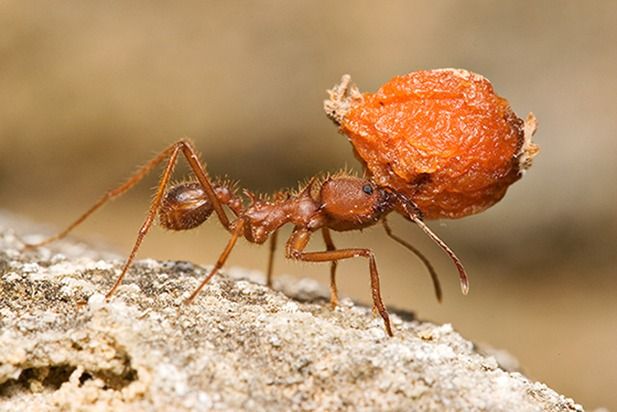
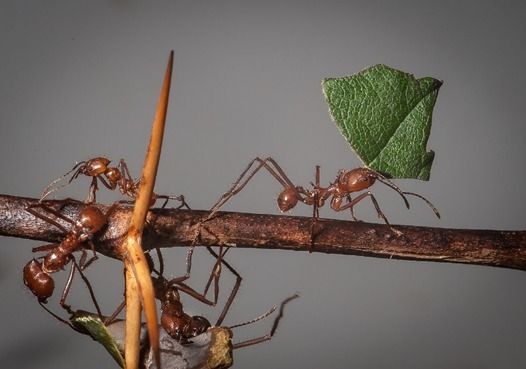
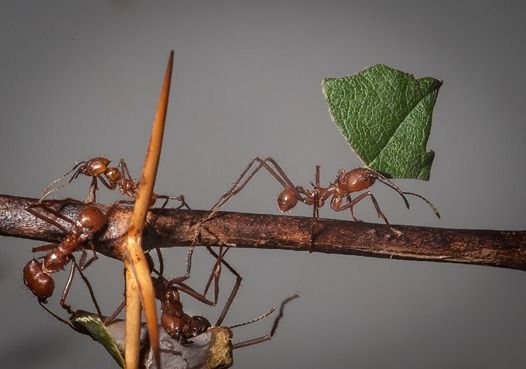
As for the scientists evolution shaped this behavior. They don’t build it in one day. It takes 10-15 years to make this huge underground network. A single ant cannot plan a kingdom the way humans plan cities. Each ant only follows simple rules like following pheromone trails (chemical signals), carry soil out when digging, and respond to other ants. As millions work together, they divide their workload and different ants have their own job. Like Major workers cut and carry leaves, medium workers build tunnels and process leaves, Minor workers take care of fungus and babies and the queen lays eggs. They are very strong for their size; these ants can carry 20-50 times their body weight.
It is observed that this behavior is to survive from predators. Over tens of millions of years, ants that built better nests survived better. colonies that stayed underground avoided predators. The colony acts like one big organism, so everything they build helps the colony live longer and grow. Living underground helps protect ants from many enemies. Deep nests make it harder for predators to reach the queen and larvae. Colonies that protected the queen survived longer.
Another reason is for climate protection. In tropical forests where leafcutter ants live, conditions change a lot. Underground nests keep stable temperature and humidity, which is important for their fungus farms.
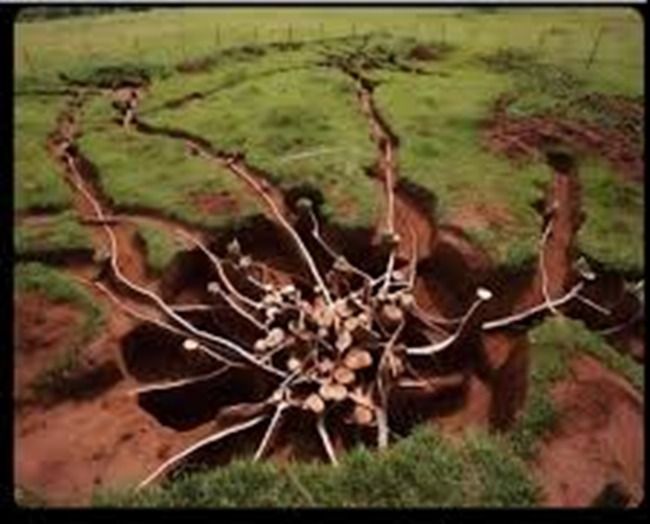
In 2012, a team of scientists led by Professor Luiz Carlos Forti poured concrete into these ant nest for 3 consecutive days into the ground. Over time the cement slowly solidified clearing away the soil bit by bit. the site that folded left the researchers present utterly astonished. The excavation uncovered a complex network of tunnels, chambers, and highways.
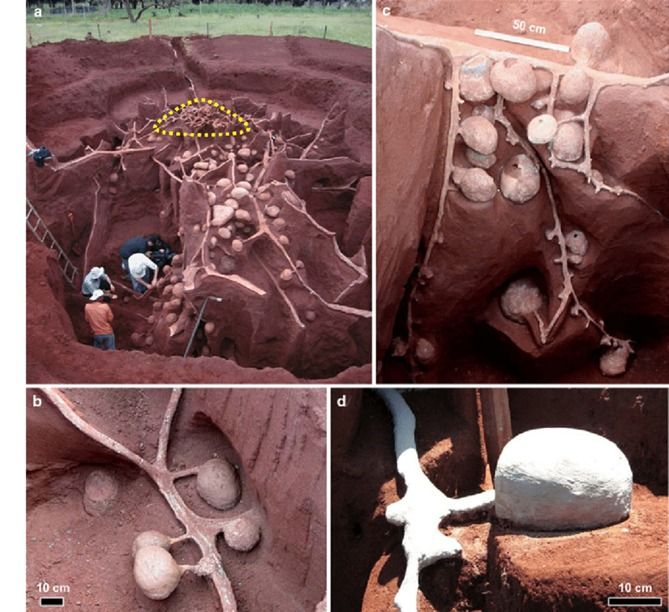
Leafcutter ants don’t eat leaves. They use leaves to grow fungus, which is their food. So underground they build special chambers called fungus gardens. Colonies with fungus chambers had reliable food. These ants host beneficial bacteria on their bodies that produce chemicals to protect their fungus gardens from mold and pests.
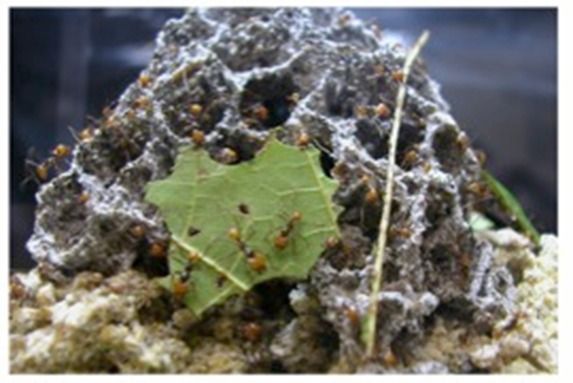
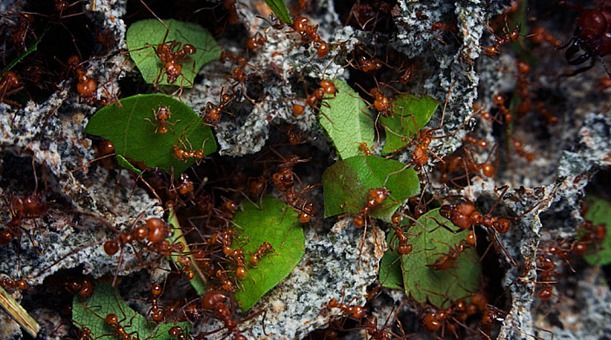
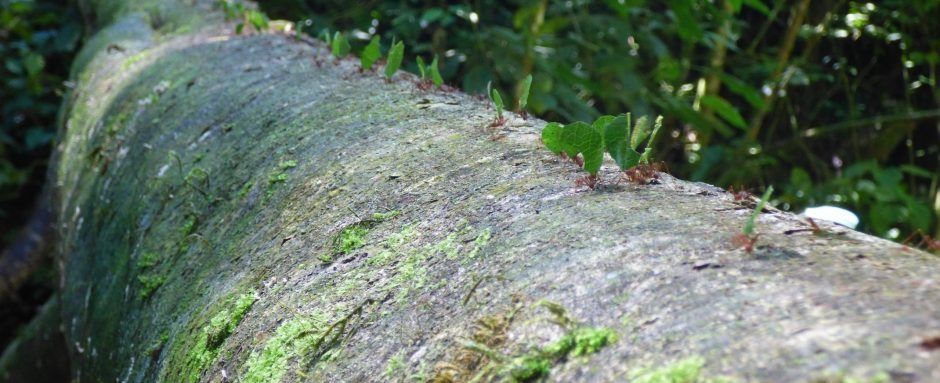
Many ants only collect food nearby, like dead insects or sugary liquids. Leafcutter ants travel far, in coordinated groups, to harvest plant material, which is unusual in the ant world. Leafcutter ants release chemical signals called pheromones as they walk. Other ants follow these pheromone trails to find the leaf sources and the nest. The smooth, organized movement emerges from millions of ants following simple rules. Scientists call this swarm intelligence or self-organization.
Nature’s creations are always a mystery to humans. We can observe, measure, and study, and from that, we can make educated guesses about how and why things happen. Yet, the true reasons often lie far beyond our calculations and predictions. Even with all our knowledge, what we see may only be a shadow of the reality. The tiny leafcutter ant, building its vast underground kingdom, reminds us that some wonders of the world are beyond full comprehension we can explain parts of it, but the whole truth may forever remain a mystery.
Written by Luhansa Fernando