Beyond Code: The Computational Thinking Powering Modern AI
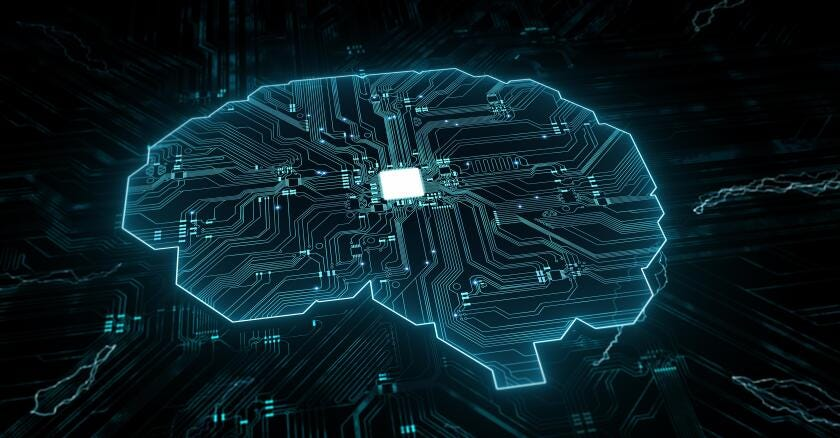
When people hear Artificial Intelligence, the first thing that comes to mind is usually complex algorithms, neural networks, and massive datasets. But underneath all that technical machinery lies something much more basic fundamental concept: computational thinking.
Computational thinking isn’t programming. It’s a way of breaking down to small parts and solving problems logically. And interestingly, the same principles we use to solve everyday problems are the ones that power modern AI systems.
In this article, we’ll explore how three core pillars of computational thinking. Which is, decomposition, pattern recognition, and abstraction. Form the backbone of AI, going far beyond just writing code.
1. Decomposition → Breaking Problems for Intelligent Systems
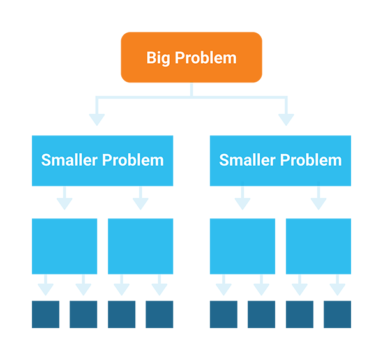
At its core, AI doesn’t “understand” problems the way we humans do. Instead, it relies on breaking complex tasks into smaller, manageable parts . A process known as decomposition.
Instead of trying to solve everything at once, you:
“Divide the problem into smaller pieces, solve each piece, then combine the results.”
How AI uses decomposition
Let’s take a real-world AI example: self-driving cars.
A self-driving system doesn’t just “drive.” It breaks down driving to multiple smaller tasks and run simultaneously:
- Detect objects (cars, pedestrians, signals)
- Understand road conditions
- Predict movement of nearby objects
- Make driving decisions (brake, accelerate, turn)
Each of these is a separate sub-problem. Engineers design different models or modules for each task, and then integrate them into one system.
Why this matters
Without decomposition, AI systems would be impossible to build. Modern AI is not one big brain, it’s a collection of smaller, specialized components working together.
Even in simpler AI applications like chatbots or recommendation systems, decomposition is everywhere:
- Input processing
- Feature extraction
- Model prediction
- Output generation
So before any code is written, the thinking step is already deeply computational.
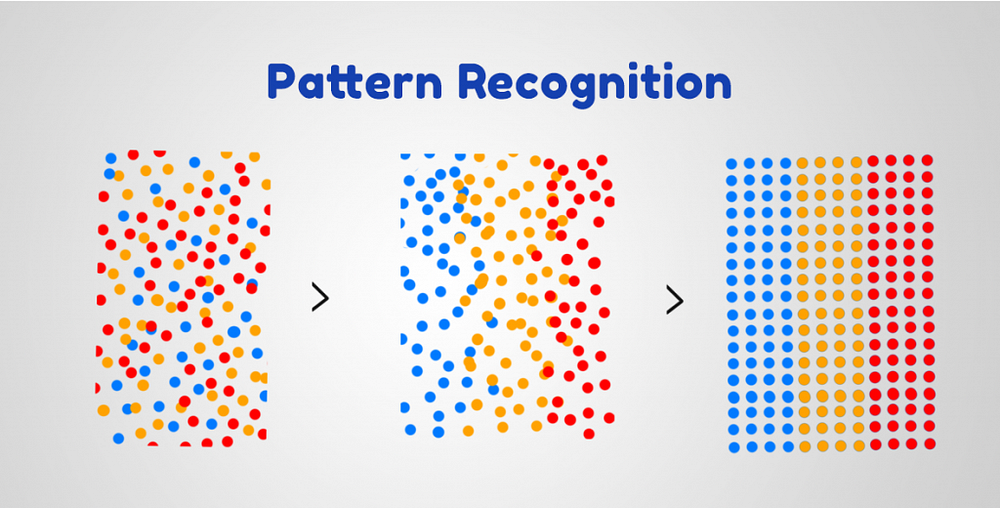
2. Pattern Recognition → The Heart of Machine Learning
If decomposition is how we structure problems, pattern recognition is how the AI actually becomes “intelligent.”
What is pattern recognition?
Pattern recognition is the ability to identify regularities or trends in data and use that data to make predictions and decisions.
Humans do this naturally:
- Recognizing faces
- Predicting weather changes
- Understanding language patterns
AI does the same — but at a much larger scale.
How AI uses pattern recognition
Machine learning models are essentially pattern-finding machines.
For example:
- A spam filter learns patterns in emails (keywords, structure, sender behavior)
- A recommendation system detects patterns in user preferences
- A medical AI identifies patterns in X-ray or MRI images
Instead of being explicitly programmed with rules, AI systems learn patterns from data.
The key idea
Traditional programming:
“If condition A happens, do B.”
Machine learning:
“Find patterns in data and predict what happens next.”
This shift is huge. It means developers don’t always tell the system how to solve a problem. They teach it to recognize patterns and figure it out itself.
Why this matters
Pattern recognition is what gives AI its power. Without it, systems would just follow fixed instructions.
It’s also why data is so important in AI. More data → better patterns → smarter predictions.
3. Abstraction → Simplifying Reality into Data
The real world is messy, complex, and full of unnecessary details. AI systems cannot process everything. This is where abstraction comes in.
What is abstraction?
Abstraction is the process of removing unnecessary details and focusing only on what matters.
How AI uses abstraction
In AI, abstraction often appears as feature selection.
Let’s say you’re building an AI model to predict whether a student will pass an exam. You might collect data like:
- Study hours
- Attendance
- Sleep patterns
- Favorite color
Clearly, not all of these are important. “Favorite color” probably has nothing to do with performance.
So you abstract the problem by selecting only meaningful features:
- Study hours
- Attendance
- Previous scores
Another example for abstraction: Image recognition
An image is just a grid of pixels, but AI doesn’t treat every pixel equally.
Instead, it abstracts important features like:
- Edges
- Shapes
- Textures
Deep learning models automatically learn these abstractions layer by layer.
Why this matters
Without abstraction:
- Models become too complex
- Training becomes inefficient
- Predictions become less accurate
Good AI design is not about using more data — it’s about using the right data.
Bringing It All Together: How AI Actually Thinks
When we combine these three ideas, we start to see how AI systems are built , not just coded.
AI doesn’t actually think like a human; instead, it processes information in a structured way that mimics the intelligent behavior. When faced with a task, an AI system first breaks the problem down into smaller parts, making it easier to handle using the decomposition step. It then learns patterns from large amounts of data, identifying relationships between inputs and outputs rather than following fixed rules in the pattern recognition stage. At the same time, it simplifies the complexity of the real world by focusing only on the most relevant information and ignoring unnecessary details by abstraction methods. Using these learned patterns, the system finally makes predictions by calculating probabilities and selecting the most likely outcome. In essence, AI is not a conscious thinker but a highly advanced system that combines problem breakdown, pattern recognition, and abstraction to make precise data-driven decisions.
Step-by-step thinking in AI:
- Decomposition
Break the problem into smaller tasks
→ e.g., detect objects, classify them, make decisions - Pattern Recognition
Train models to find patterns in data
→ e.g., recognize faces, predict behavior - Abstraction
Focus only on relevant information
→ e.g., select features, ignore noise
This is computational thinking in action.
Real-World AI Examples: Computational Thinking in Action
AI might seem abstract or futuristic, but computational thinking is at the heart of almost every AI system we use today. By looking at real-world examples, we can see how decomposition, pattern recognition, and abstraction actually work.
a) Netflix Recommendations
Ever wonder how Netflix seems to know exactly what show you’ll binge next? Behind the scenes, the recommendation system doesn’t just “guess.” It breaks the problem into smaller parts:
- Decomposition: Separate tasks such as tracking what shows you’ve watched, comparing your history with others, and evaluating show popularity.
- Pattern Recognition: The system looks for patterns in viewing habits, like people who watched Stranger Things also tend to watch The Umbrella Academy.
- Abstraction: Not every detail about your watching habits matters. The algorithm focuses on features like genres, ratings, watch time, and frequency, ignoring less relevant data like the exact time you paused a video.

b) Self-Driving Cars
Self-driving vehicles are a classic example of AI thinking at scale. They face incredibly complex tasks, which are made manageable through computational thinking:
- Decomposition: Driving is broken into sub-tasks — detecting lanes, recognizing traffic signals, avoiding obstacles, and making route decisions.
- Pattern Recognition: The car’s AI learns patterns in traffic behavior, pedestrian movements, and road conditions from thousands of driving hours.
- Abstraction: The system ignores irrelevant details (like the color of the sky or advertisements along the road) and focuses only on actionable features like vehicle speed, road edges, and nearby obstacles.

c) Medical Imaging AI
AI in healthcare is saving lives by detecting diseases in X-rays, MRIs, or CT scans. Here’s how computational thinking applies:
- Decomposition: The task of diagnosing a disease is divided into steps — segmenting the image, identifying anomalies, comparing with known patterns, and suggesting a diagnosis.
- Pattern Recognition: The AI identifies common signs of diseases, like tumor shapes or irregular tissue patterns, by learning from thousands of labeled scans.
- Abstraction: Only the features relevant to disease detection are considered; everything else in the image is filtered out, allowing faster and more accurate predictions.
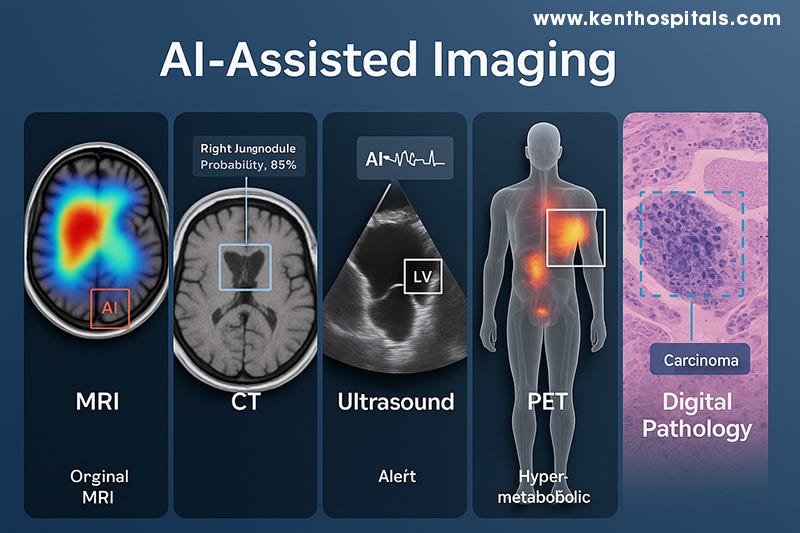
These examples show that AI is not just about code. It’s a structured problem-solving process, applied to real-world challenges. Each step mirrors human computational thinking, scaled up with data and algorithms.
Beyond AI: Why This Matters for Students and Developers
Understanding how AI works at a thinking level matters a lot for both students and developers because it changes how they approach problems. Instead of focusing only on syntax or tools, they learn to break complex problems into smaller parts, recognize patterns in data, and simplify situations by focusing on what really matters. This makes it easier to design efficient solutions, whether it’s building software, training machine learning models, or working on real-world systems. For students, this way of thinking builds a strong foundation that goes beyond any single programming language and prepares them for fields like data science, AI, and software engineering. For developers, it leads to better system design, smarter decision-making, and the ability to solve problems that don’t have straightforward answers. In a world increasingly driven by intelligent systems, computational thinking becomes not just a useful skill, but a core advantage. Understanding computational thinking is more important than just learning programming languages.
You can know Python, Java, or any framework — but without the ability to:
- Break problems down
- Identify patterns
- Simplify complexity
…you won’t be able to build effective systems.
This is especially important in fields like:
- Data Science
- Machine Learning
- Software Engineering
- IoT and Embedded Systems
Interestingly, even non-technical fields are starting to use these concepts, from business analytics to healthcare decision-making.
Common Misconceptions About AI
Despite all the hype, many people misunderstand what AI actually is and how it works. Clarifying these misconceptions helps students and developers approach AI with a clearer perspective.
Misconception 1: AI Thinks Like Humans
Many assume that AI understands concepts, feels emotions, or reasons like a person. In reality, AI doesn’t “understand” things completely. It identifies patterns in data and predicts outcomes. It lacks consciousness, intuition, and self-awareness. A model might predict a cat in a photo perfectly, but it doesn’t know what a cat actually is.
Misconception 2: AI Can Solve Any Problem Automatically
AI isn’t magic. It only works well for problems that can be broken down, quantified, and learned from data. If the data is messy, biased, or incomplete, the AI will struggle or produce inaccurate results. Computational thinking — decomposition, pattern recognition, and abstraction — is required to structure problems properly before any model can even work.
Misconception 3: More Data Always Makes AI Smarter
While data is essential, it’s not the only ingredient. Poorly chosen or irrelevant data can confuse a model, creating errors or biases. Abstraction is the main key: selecting the right features and ignoring unnecessary information ensures AI learns the right patterns and most precise outputs.
Misconception 4: AI Replaces Human Jobs Completely
AI can automate certain tasks, but its effectiveness depends on the way problems are structured. Humans are still needed to break down problems, interpret results, and make decisions in complex, ambiguous situations. Understanding AI’s computational thinking helps students and developers see where human insight adds value.
By addressing these misconceptions, learners can focus on what truly matters: how AI “thinks” through structured problem-solving rather than blindly following code, making it easier to build better systems and innovate responsibly.
Final Thoughts
AI might seem like magic, but it’s actually built on very human ways of thinking.
Computational thinking is what bridges the gap between human intelligence and machine intelligence.
- Decomposition helps machines handle complexity
- Pattern recognition helps them learn
- Abstraction helps them focus
So the next time you think about AI, don’t just think about code or algorithms. Think about the thinking process behind it.
In the end, AI is not just a technological breakthrough — it’s a reflection of how structured thinking can transform complexity into clarity. The real power doesn’t lie in the code itself, but in the way problems are understood, broken down, and approached. As AI continues to shape industries and redefine the future, those who master computational thinking won’t just use these systems . They’ll be the ones designing them, improving them, and pushing their boundaries. Because ultimately, the future of AI doesn’t belong to those who simply code, but to those who truly understand how to think.
This article was also published on my personal blog on Medium