From Ancient Heritage to Digital Heritage: How Technology Can Protect Sri Lanka's History
Introduction
Sri Lanka is more than a beautiful island in the Indian Ocean. It is a land shaped by thousands of years of civilization, scientific knowledge, engineering, religion, art, agriculture, literature, and cultural traditions. From the ancient cities of Anuradhapura and Polonnaruwa to the extraordinary engineering of the ancient irrigation systems, Sri Lanka's heritage represents the knowledge and creativity of generations who lived long before the modern technological era. Today, however, preserving this heritage is becoming increasingly challenging. Ancient monuments, inscriptions, manuscripts, archaeological sites, traditional knowledge, and cultural practices can be damaged by natural processes, environmental changes, human activity, neglect, and the simple passage of time. At the same time, the digital age provides us with powerful tools that can help document, understand, monitor, and share our heritage. The question is no longer simply how we can preserve history physically. We should also ask: How can modern technology help us create a reliable digital record of our past for future generations?
Sri Lanka's Historical Heritage: More Than Ancient Buildings
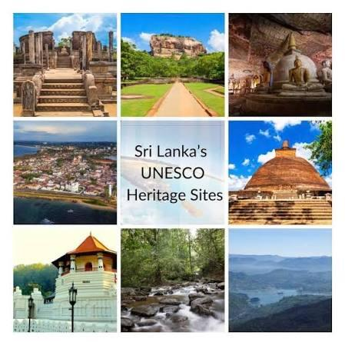
When people hear the word "heritage," they often think about famous places such as Sigiriya, the ancient cities, temples, stupas, and archaeological monuments. These are certainly important, but Sri Lanka's heritage is much broader. It includes ancient inscriptions, palm-leaf manuscripts, traditional architecture, irrigation knowledge, indigenous agricultural practices, traditional medicine, handicrafts, languages, religious traditions, folklore, music, dance, and oral histories. Ancient Sri Lankan irrigation systems are an excellent example of this wider heritage. Large tanks, canals, reservoirs, and interconnected water-management systems demonstrate sophisticated knowledge of water management and agriculture. These achievements remind us that historical heritage is not simply about old objects; it is also about human knowledge and problem-solving. Therefore, protecting Sri Lanka's heritage means protecting both physical evidence and the knowledge associated with it.
Why Is Our Heritage at Risk?
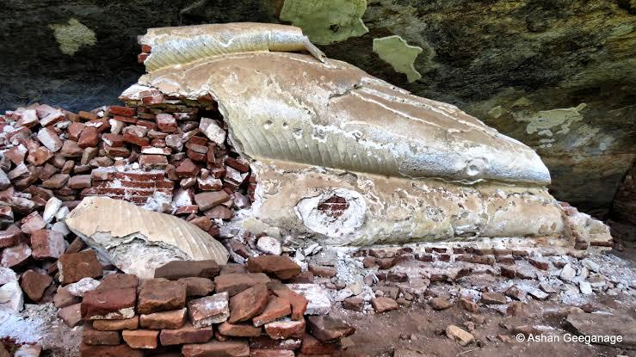
Historical heritage is vulnerable for many reasons. Natural weathering can gradually damage stone structures, inscriptions, paintings, and sculptures. Humidity, temperature changes, biological growth, and water can contribute to deterioration. Natural disasters can create additional risks. Floods, landslides, storms, and other environmental events can affect archaeological sites and historical structures. Human activities can also create serious challenges. Urban development, pollution, irresponsible tourism, illegal excavation, vandalism, and poor maintenance can threaten valuable heritage. Another less visible problem is the loss of traditional knowledge. When information is passed only from one generation to another without proper documentation, parts of that knowledge can disappear. This is where modern technology can become an important partner in preservation.
3D Technology: Creating Digital Copies of the Past
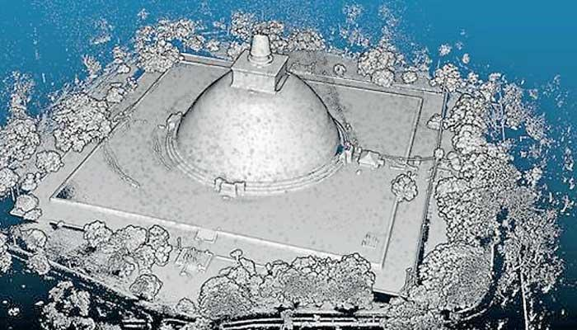
One of the most valuable technologies for heritage preservation is 3D scanning and photogrammetry. Photogrammetry can use photographs taken from different positions to construct detailed three-dimensional models. Laser scanning technologies can also capture highly accurate measurements of physical structures. Imagine creating a detailed digital model of an ancient monument. If the physical structure is later damaged, researchers could still have a highly detailed digital record showing its condition before the damage. These models can also support archaeological research, conservation planning, education, and virtual tourism. However, an important scientific principle must be maintained: a digital reconstruction should accurately distinguish between measured evidence and artistic interpretation. If part of an ancient building is unknown, a reconstruction should not present an assumption as proven historical fact.
Artificial Intelligence and Historical Research
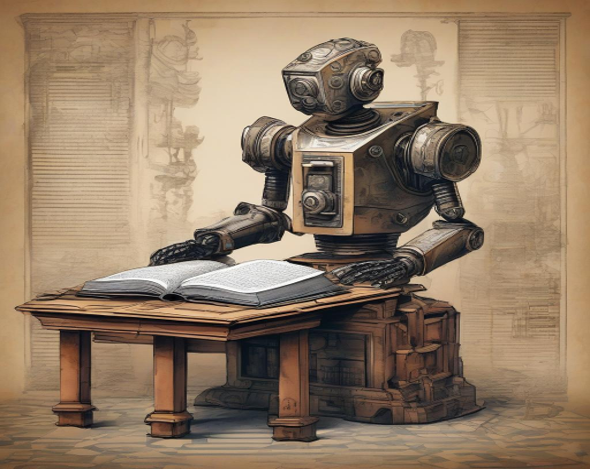
Artificial intelligence is another technology that could transform heritage research. AI can assist researchers in organizing large collections of documents, recognizing patterns in images, processing historical datasets, and supporting the study of ancient inscriptions and manuscripts. For example, digitized historical documents could potentially be processed using optical character recognition and machine-learning techniques. Researchers could then search large collections more efficiently than through manual examination alone. AI could also help compare different versions of historical records or identify similarities between archaeological objects. But AI has an important limitation: it does not automatically know what is historically true. AI systems can generate convincing but inaccurate information. Therefore, AI should assist historians, archaeologists, conservators, and researchers rather than replace them. Every important historical claim should be evaluated against reliable evidence, scholarly research, archaeological findings, and authenticated records.
GIS, Satellites and Drones: Seeing Heritage from Above
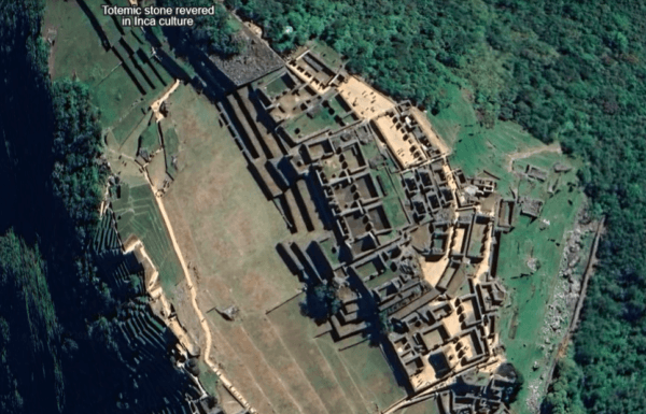
Geographic Information Systems, commonly known as GIS, can connect historical information with geographical locations. A digital heritage map could show archaeological sites, ancient settlements, irrigation systems, historical buildings, and environmentally sensitive areas. Researchers could then analyze how historical sites relate to geography, water systems, agriculture, transportation routes, and settlements. Satellite imagery can also help monitor changes to landscapes over time. Drones provide another useful tool. They can capture high-resolution aerial images of large or difficult-to-access sites. Repeated surveys can help researchers identify physical changes and monitor conservation conditions. In suitable archaeological research, technologies such as LiDAR can also help reveal landscape features that may be difficult to identify from ground level, particularly in areas covered by dense vegetation. These technologies do not replace traditional archaeological fieldwork. Instead, they provide additional scientific evidence and improve the ability to observe and document large areas.
Digital Archives: Preserving Knowledge for Future Generations
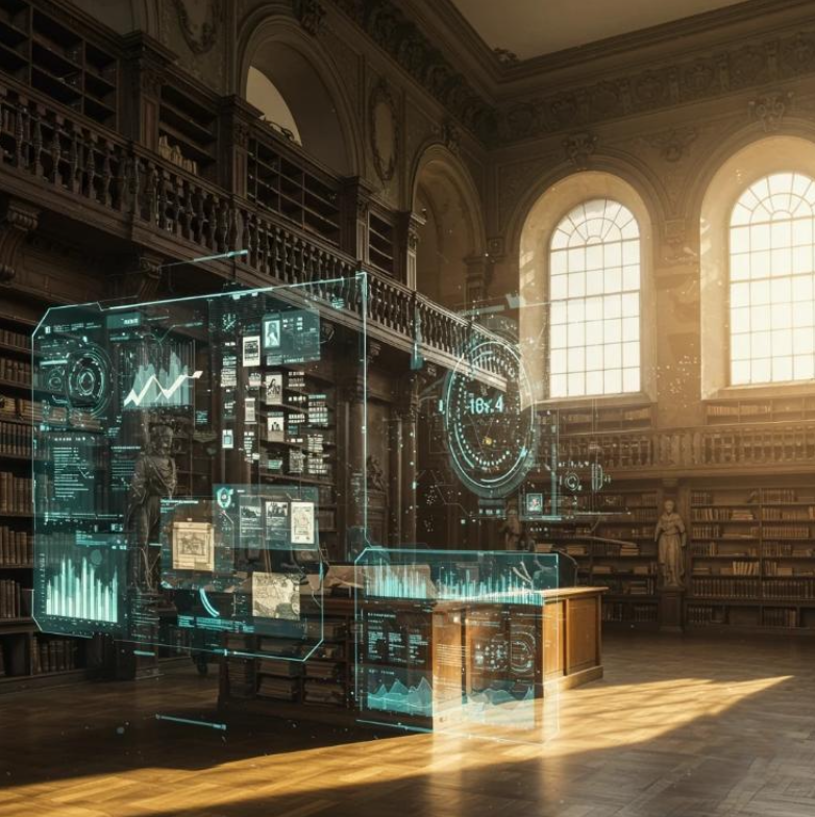
A physical manuscript can deteriorate. A photograph can fade. A historical document can be damaged by fire, water, or insects. Digital preservation provides another layer of protection. Libraries, museums, universities, archives, and cultural institutions can digitize manuscripts, photographs, maps, inscriptions, documents, and artifacts. These digital records can be stored using secure storage systems and backed up in multiple locations. Cloud computing can support large-scale digital collections, while appropriate metadata can record important information such as the object's origin, date of digitization, location, condition, and source. However, digital preservation itself requires careful management. Digital files can become corrupted, formats can become obsolete, and storage systems can fail. Therefore, long-term digital preservation requires regular backups, integrity checks, migration to sustainable formats, cybersecurity, and clear data-management policies.
Virtual Reality: Bringing History to a New Generation
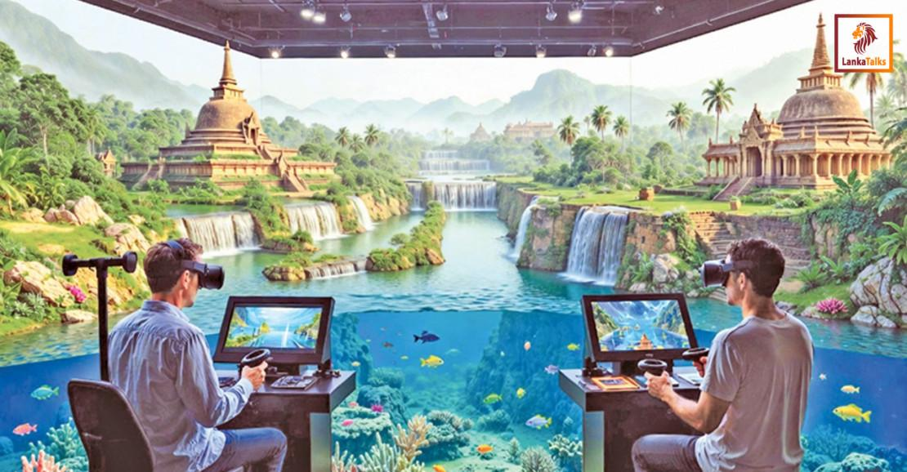
Technology can also change how people experience history. Virtual Reality (VR) could allow students and visitors to explore digital reconstructions of historical environments. Augmented Reality (AR) could provide additional information when people visit real heritage sites. Imagine visiting an archaeological location and using a mobile device to view evidence-based reconstruction of how a structure may have appeared in an earlier period. Such experiences can make history more engaging for younger generations. But again, there must be a clear distinction between historical evidence and reconstruction. A virtual environment should identify which elements are confirmed and which are interpretations based on available evidence.
Protecting the Truth in the Digital Age

Perhaps the most important part of digital heritage is not technology itself, but trust. The internet allows information to spread rapidly. Unfortunately, inaccurate historical stories, manipulated photographs, AI-generated images, and unsupported claims can also become popular. A realistic AI-generated image does not become a historical photograph simply because it looks authentic. Therefore, digital heritage projects should clearly identify their sources and evidence. Information should ideally be reviewed by qualified historians, archaeologists, scientists, or relevant cultural institutions. A useful principle is: Evidence first. Technology second. Technology should help us preserve and understand history-not rewrite it.
A Vision for Sri Lanka's Digital Heritage
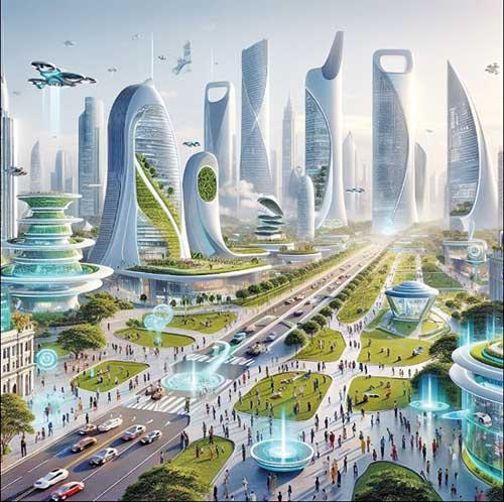
Sri Lanka could benefit from a comprehensive Digital Heritage Network that brings together museums, universities, researchers, archaeologists, libraries, government institutions, and technology professionals. Such a platform could contain verified information about archaeological sites, 3D models, digitized manuscripts, historical photographs, GIS maps, museum collections, oral histories, and educational resources. Each digital record could include its location, historical period, documentation method, evidence, references, and conservation status. This would create a valuable resource for students, researchers, teachers, tourists, and future generations.
Conclusion
Sri Lanka's historical heritage belongs not only to the people of today but also to the generations who will come after us. Our responsibility is not simply to admire the achievements of the past. We must document, understand, protect, and responsibly share them. Modern technology offers extraordinary possibilities. 3D scanning can document structures, AI can assist research, GIS can map heritage, satellites and drones can monitor landscapes, digital archives can preserve information, and VR can make history accessible in new ways. But technology alone cannot protect history. Scientific methods, archaeological evidence, expert knowledge, ethical preservation, and respect for authenticity must guide its use. The future of heritage preservation should therefore not be a competition between the ancient and the modern. Instead, it should be a partnership: Our ancestors gave us the heritage. Science helps us understand it. Technology helps us preserve it. And our generation must pass it forward. Sri Lanka's past is a priceless record of human knowledge and creativity. If we combine that heritage with responsible modern technology, we can help ensure that the story of Sri Lanka remains not only remembered-but accurately preserved for generations to come.