They Were Children Too
Have you ever had a fight with your parents? Not just a small argument about cleaning your room or coming home late. I mean the kind of fight where voices get louder, doors get closed, and suddenly you feel like nobody in your house understands you. Maybe you said something you didn't mean. Maybe they said something that hurt you more than they realized.
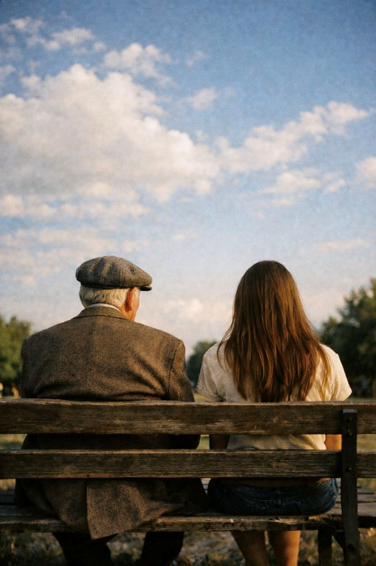
And then, after everything becomes quiet, you sit alone in your room.
You think about what happened.
And you ask yourself...
"Was I wrong?"
"Were they wrong?"
"Should I apologize?"
Or maybe, for a few minutes, you feel like you won the fight. But somehow, it doesn't really feel like winning. Because when you fight with your parents, even if you prove your point, there is often a strange feeling left inside you.
A little guilt. A little anger. A little sadness.
And sometimes, a small part of you wish you could go back five minutes and say things differently.
Have you ever thought, "My parents are not good parents"?
I think many of us have. There are moments when we look at our parents and think,
"Why can't you understand me?"
"Why are you always like this?"
"Other parents let their children do this. Why can't you?"
"You don't understand what I'm going through."
And honestly? Sometimes, they really don't understand. Because they are not perfect.
They can make mistakes. They can lose their temper. They can say the wrong thing. They can make decisions that we don't agree with.
Sometimes they may even hurt us without realizing how deeply their words or actions affect us. But there is something we often forget.
This is their first time being parents too.
They didn't get a book when we were born. There was no instruction manual saying,
"If your child cries, do this."
"If your child becomes a teenager, say this."
"If your child makes a mistake, react like this."
They were learning too. Just like we are learning how to become adults.
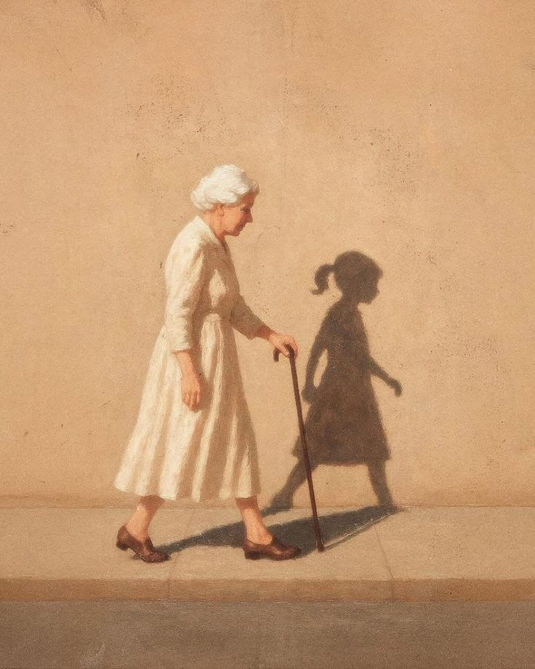
Before they were our parents, they were someone's children.
This is something I think about sometimes. Before our mother became "Mom", she was just a girl.
She had dreams. She had friends. She laughed loudly. She probably made mistakes. She probably had arguments with her own parents. She was once a teenager who thought she knew everything. She had things she wanted to do. Things she wanted to become.
And our father?
Before he became "Dad", he was also just a boy. He had his own childhood. His own fears. His own dreams. His own silly moments. He had people he loved. Maybe he also had his own teenage rebellion. Maybe he made decisions his parents didn't understand. Maybe he also once thought,
"My parents don't understand me."
Funny, isn't it?
One day, they were children. And then suddenly, they became responsible for another little human being.
Us.
They had to learn how to raise us while they were still trying to figure out their own lives.
We don't know everything they went through.
We know our parents as our parents. But we don't know them completely as people. We don't know every problem they faced when they were young. We don't know every night they stayed awake worrying. We don't know every dream they gave up. We don't know every time they were scared but still had to act strong. We don't know every financial problem they kept away from us. We don't know every disappointment they experienced. We don't know every time they smiled at us while something inside them was breaking.
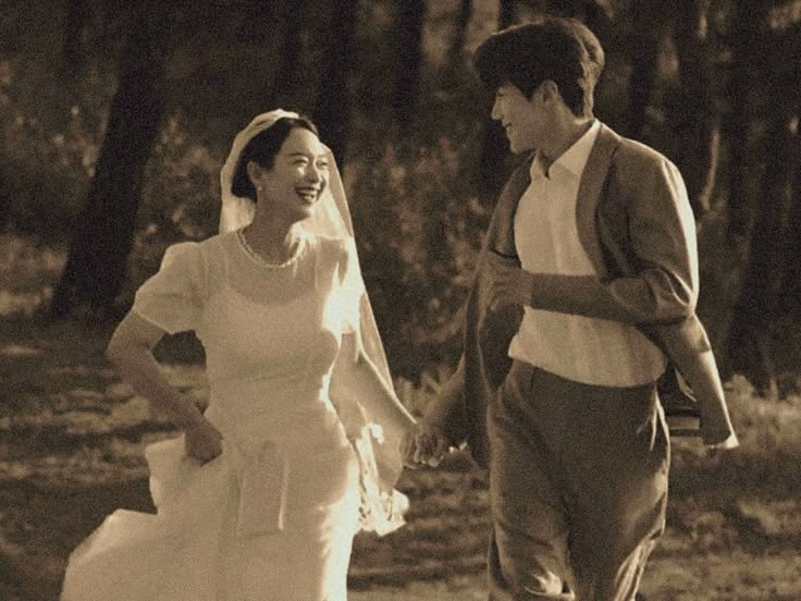
Because parents don't always tell us everything. Sometimes they carry their problems quietly because they don't want their children to worry. And maybe one day, when we are older, we will finally understand some of it.
Maybe we'll look at them and think,
"Oh... so that's why you were like that."
Not because everything they did was right. But because suddenly, we can see them as people. Not just as "Mom" and "Dad". But as human beings.
Nobody is completely good or completely bad.
We like to put people into boxes. Good people. Bad people. Right people. Wrong people.
But real people aren't that simple. We are all a mixture.
A little good. A little bad. A little kind. A little selfish. A little patient. A little angry.
We make beautiful choices sometimes. And terrible choices at other times. Our parents are the same. They can be the people who make us feel safest in the world. And they can also be the people who hurt us the most. Both things can be true. You can love someone and still be angry with them. You can be grateful for someone and still disagree with them. You can forgive someone and still remember what happened. And you can understand why someone did something without saying that what they did was right.
Understanding is not the same as accepting everything. That’s an important difference. So, love them while you still can.
Sometimes we are so busy building our own lives that we forget our parents are growing older too.
We say,
"I'll call them later."
"I'll talk to them tomorrow."
"I'm busy right now."
"I have assignments."
"I have work."
"I have friends to meet."
And yes, life is busy. We have our own dreams. Our own problems. Our own responsibilities.
But sometimes, all our parents want is a little piece of our time.
Maybe they ask,
"Did you eat?",
for the hundredth time. Maybe they ask where you're going. Maybe they call when you're outside. Maybe they send you a message just to ask what you're doing.
Sometimes we get annoyed.
"Why do you keep asking me?"
But maybe behind that question is simply,
"I want to know that you're okay."
Maybe their way of showing love is not always the way we want to receive it. But sometimes, love hides inside the most ordinary questions.
"Did you eat?"
"When are you coming home?"
"Do you need money?"
"Did you reach safely?"
"Are you feeling okay?"
These questions may sound small. But one day, we might miss hearing them.
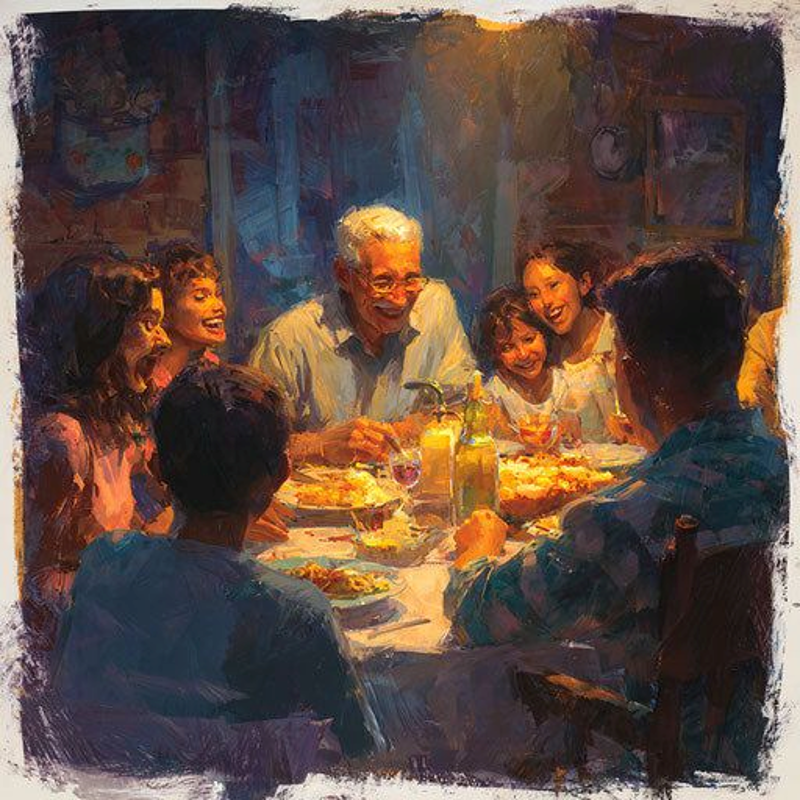
Make time for them.
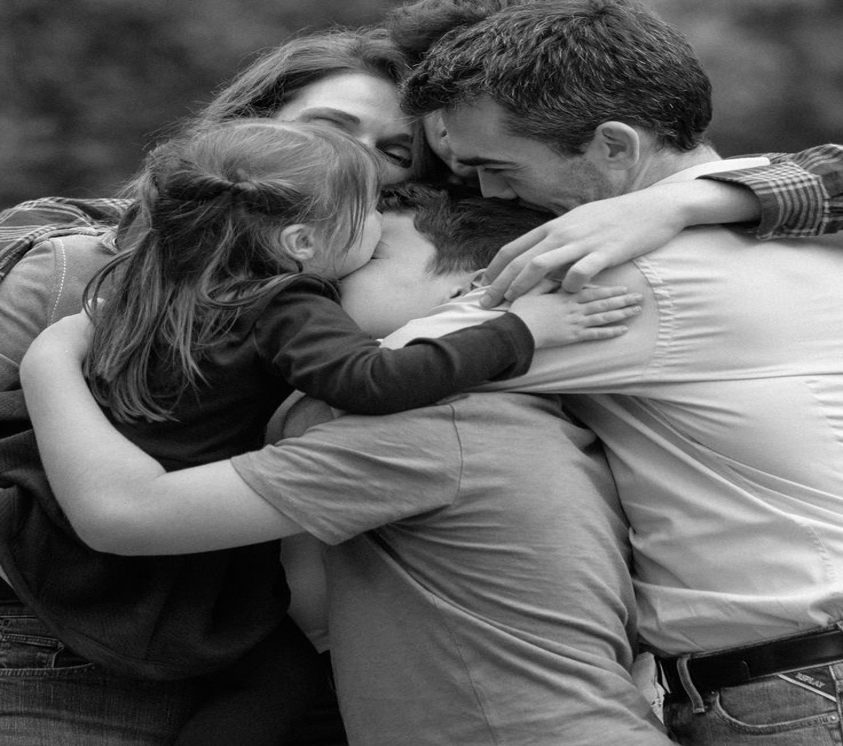
Sit with them. Have tea together. Watch something together. Ask them about their day. Listen to the same story they've already told you five times. Call them when you're outside. Send them a random message. Buy them something small when you come home. Give them a hug, even if you're not usually the hugging type. Because we don't know how much time we have. And neither do they.
We always think we have more time. More birthdays. More conversations. More dinners. More holidays. More chances to say,
"I love you."
But life doesn't promise us those chances.
But what if your parents really hurt you?
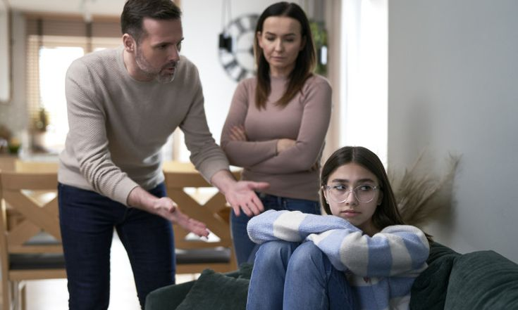
This is where I think we need to be careful. Because saying "love your parents" should never mean telling a child to accept abuse, fear, or constant pain. Not every parent is kind. Not every parent protects their child. Not every parent knows how to love properly.
Some children grow up feeling unsafe in the place that was supposed to be their safest place. And for those children, "just forgive your parents" can be a very painful thing to hear. So yes, love your parents if you can. Forgive them when you are ready. But also protect yourself. Set boundaries when you need to. Speak about your pain. Ask for help when you need it. You are allowed to admit that something hurts you.
You are allowed to say,
"They are my parents, but what they did was not okay."
Because the truth is...
Every child deserves parents.
But sadly,
not every parent deserves the title of a good parent.
Being someone's mother or father doesn't automatically make someone a good person. Parenting is a responsibility. And some people fail at it. That is painful, but it is true.
Maybe one day, we will understand.
Maybe one day, we will understand.
Maybe one day, we will sit beside our parents when we are older. Maybe we'll look at their grey hair and notice the wrinkles on their faces. Maybe we'll suddenly realize that the person we once thought was so strong was just another human being trying to survive life. And maybe we'll start asking them about the life they had before us — about their childhood, their first love, their first job, their biggest dream, their biggest regret, and the things they never told us. Maybe then, we'll discover a completely different story, a story that existed long before we were born, before we ever knew them as "Mom" and "Dad."
We often remember the moments when our parents made us angry — the times they said no, the times they didn't understand us, the times they embarrassed us, the times they shouted, and the times they made mistakes. But maybe we should also remember the other moments, the fever nights when they stayed awake for us, the mornings they woke up early, the food they made, the clothes they bought, the school things they paid for, the times they worried when we were late, and the times they secretly sacrificed something for us without ever telling us. We should remember all those moments when they said, "I'm fine," maybe even when they weren't. No parent is perfect, and neither are we.
Maybe growing up is not only about becoming independent from our parents. Maybe growing up is also about seeing them as human beings — not superheroes, not villains, just people. People who were once children, people who had dreams, people who made mistakes, people who were hurt, people who learned from their own parents, and people who are still learning even today. They may not always know the right thing to say or do, but in their own imperfect way, they may simply be trying to love us.
So, the next time you have a fight with your parents, take a breath. You don't always have to agree with them, and you don't have to pretend they were right when they weren't. You don't have to hide your feelings or pretend that something didn't hurt you. But before you walk away, remember something: they are human too. And if they are still there, if you still have the chance to call them, if you can still sit beside them, hear their voice, and say,
"Amma, I'm home," or "Thaththa, how was your day?"
Then maybe, don't wait. Put your phone down for a little while. Sit beside them. Ask them how they are. Listen to them. Laugh with them. Forgive them when you can and love them while you still have the chance. Because one day, we may give anything just to have one more ordinary conversation with them. And maybe then we'll realize that the things we once found annoying were sometimes the very things that quietly told us, we were loved.